Giulia Quattrocolo, Ph.D.
Principal Investigator
Kavli Institute for Systems Neuroscience
Faculty of Medicine and Heath Sciences
NTNU
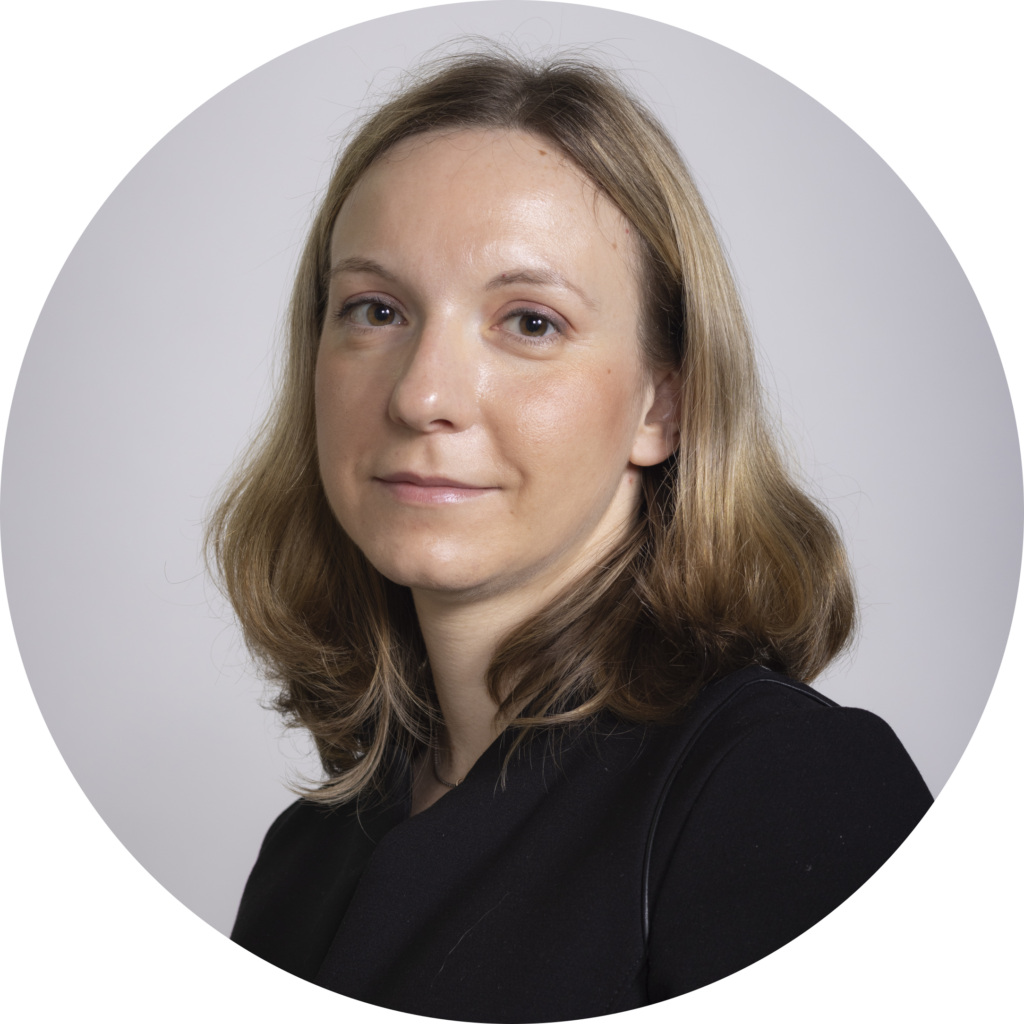
Giulia’s journey into neuroscience began during her Bachelor’s studies in Biology at the University of Pavia, Italy. A lecture on the neurophysiology of the Pacinian corpuscle sparked her fascination with the nervous system and set her on a path that would take her across Europe and the United States in pursuit of understanding how neural circuits develop and function.
This early interest led her to complete a Master’s degree in Neurobiology, where she investigated the developmental expression of sodium currents in stellate cells of the entorhinal cortex. She then moved to Chicago to pursue a Ph.D. in Neuroscience at Northwestern University, working in the laboratory of Dr. Gianmaria Maccaferri. During this time, she developed a deep interest in Cajal–Retzius cells and their role in shaping neuronal circuits during development.
Following her Ph.D., Giulia joined the laboratory of Dr. Gord Fishell at New York University, where she expanded her expertise in developmental neuroscience by studying the genetic and environmental factors that influence interneuron maturation. In 2017, she moved to Trondheim, Norway, to work with Dr. Edvard Moser at NTNU, where she learned advanced in vivo recording techniques in freely moving mice to investigate the role of Cajal–Retzius cells in spatial navigation.
Since 2021, Giulia has been leading the Circuit Development Lab at the Kavli Institute for Systems Neuroscience, where her research continues to uncover fundamental mechanisms underlying neural circuit development and function.
1)Spatial representation in CA1 superficial pyramidal cells is impaired after postnatal ablation of hippocampal Cajal-Retzius cells
2) Proteomic profile of hippocampal growth cones through early postnatal development
3) Differences in Cajal–Retzius Cell Density and Postnatal Persistence Across Cortical Areas Revealed by a Novel Intersectional Genetic Labeling Approach

Rui Benedito, Ph.D.
Principal Investigator
Department of Functional Genetics,
Max Planck Institute for Molecular Biomedicine,
Germany

Rui Benedito graduated in Microbiology and Genetics at the Faculty of Sciences (University of Lisbon) and then did his PhD at the Faculty of Veterinary Medicine (Lisbon) where he became interested in mouse genetics and developmental vascular biology. He then moved to the UK where he did a Postdoc at the London Research Institute (Cancer Research UK) and after in Germany at the Max Planck Institute for Molecular Biomedicine. His postdoctoral work focused on understanding the roles of the different Notch and VEGF signalling members in angiogenesis, for which he received the Peter Hans Hofschneider Prize 2009 for the outstanding achievement in the field of molecular medicine and the Werner Risau Prize 2013. His findings have implications for the design of therapies targeting angiogenesis.
After his postdoctoral studies, Rui Benedito joined CNIC as a group leader and received the Fundacion Principe de Girona Science Prize in 2014. At CNIC, his group has developed genetic technology of broad interest (ifgMosaics, iSuRe-Cre, iFlpMosaics, iSuRe-HadCre) and is using it to understand the biology and development of blood vessels at high genetic and cellular resolution.