Jsem výzkumník/výzkumnice v Botanický ústav AV ČR, a Národní muzeum přírodní historie v Paříži. Fascinují mě rostlinní zloději. Proto studuji rostliny, které se živí uhlíkem ukradeným houbám – mykoheterotrofy, přesněji jejich ekofyziologii a konvergentní evoluci. K tomu používám řadu molekulárních metod, in vitro kultivační systémy a analýzy množství stabilních izotopů.
Vzhledem ke své složitosti je střídání generací u mechorostů noční můrou pro mnoho studentů. Obrázek ukazuje štětiny a tobolku (sporofyt) mechu, ze které se již uvolnily spory. Peristom tobolky (červeně zbarvený) připomíná zuby hlubinného predátora, který se chystá chytit svou kořist. Na tomto obrázku je touto „kořistí“ klíčící pylové zrno slézu lesního (Malva sylvestris), které se náhodou ocitlo v zorném poli.
Samčí květ tropického mykoheterotrofního druhu Sciaphila albescens. Tato přibližně 10 cm vysoká rostlina neobsahuje chlorofyl a parazituje na houbách. Z hub získává uhlík, který houby získaly výměnou za minerály prostřednictvím mykorhizní symbiózy s tropickými stromy. Barevná SEM mikrofotografie. Hvězdicovité okvětní lístky jsou zbarveny oranžově, tyčinka je růžová a uvolňující pyl je červený. Květní stopka je modrá.
Květ rostliny Senega trichosperma. Jedná se o druh mléčníku z amazonského deštného pralesa. Tyto rostliny mají složitou květní strukturu – z okvětních lístků vyčnívá třásňový přívěsek a opylování zahrnuje sofistikovaný mechanismus: opylovač musí zatáhnout za kýl, aby se dostal k pylu. Některé mléčníky jsou houboví paraziti – mykoheterotrofové – a proto je studuji.
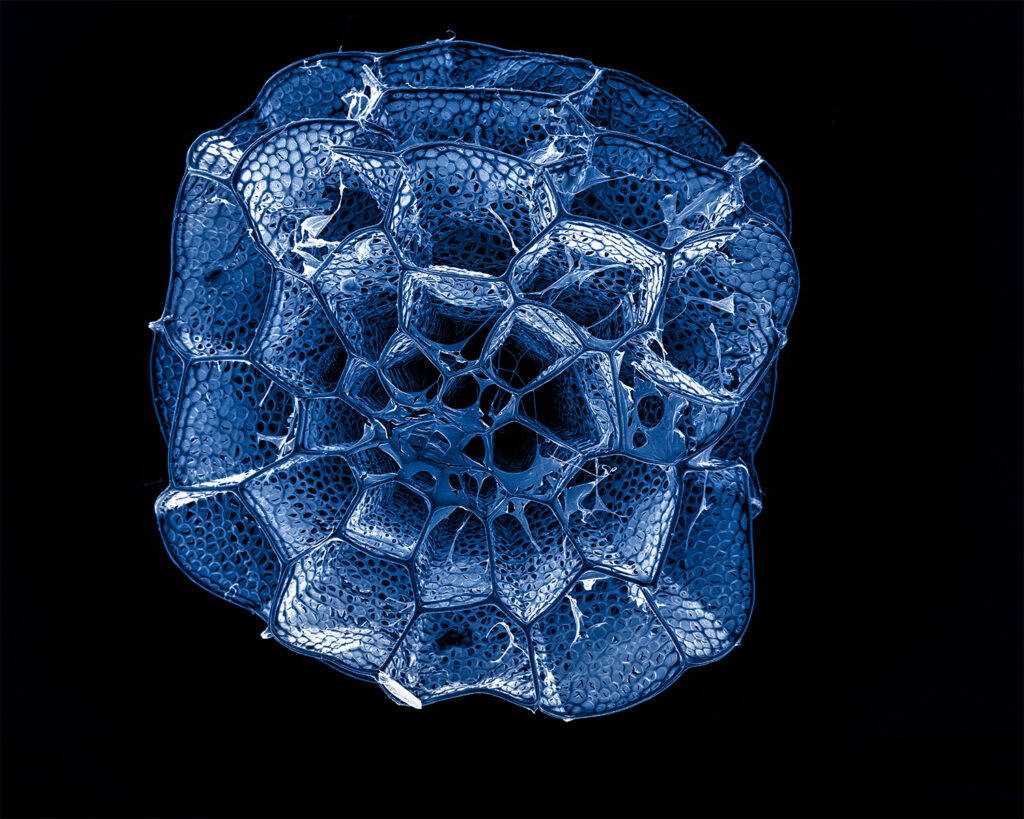
Xylanche himalaica, jarní kvetoucí parazitická rostlina bez špetky chlorofylu, se živí rododendrony a na první pohled by možná nevyhrála soutěž krásy. Podívejte se však blíže: její semena, připomínající drobné krystalky nebo diamanty, mají nečekanou eleganci. Jemné, perforované struktury, které vidíte, pomáhají této rostlině bez námahy šířit se ve větru. Snímek pořízený pomocí rastrovacího elektronového mikroskopu + kolorovaný.
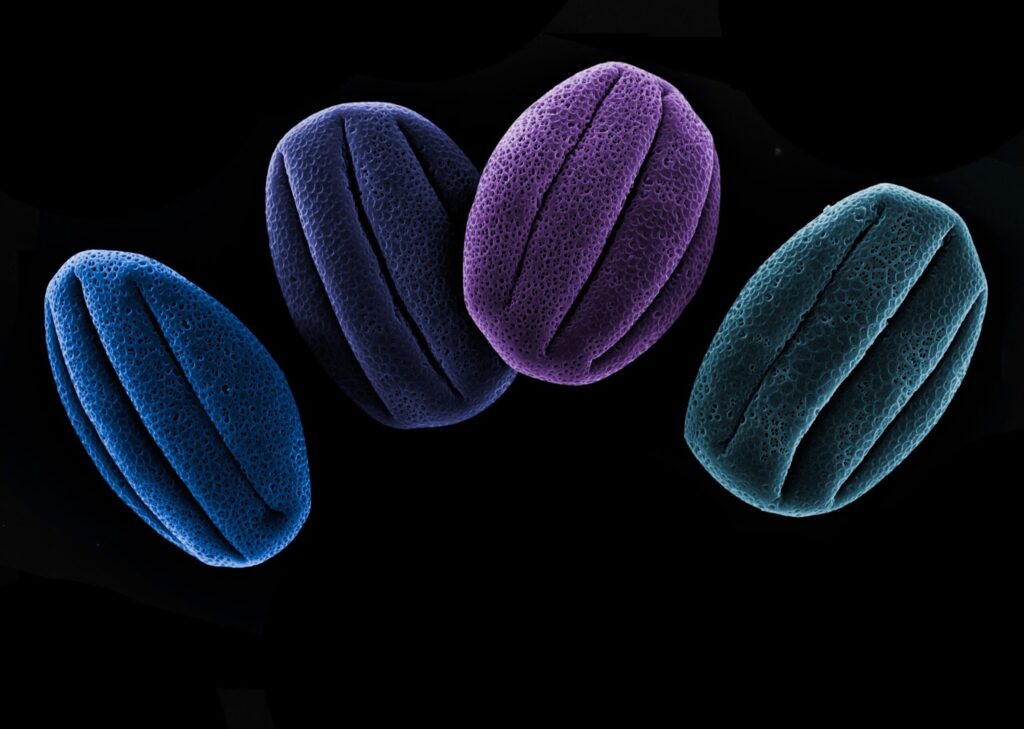
Jsou zobrazena čtyři pylová zrna levandule v různých odstínech fialové. I když pyl levandule méně pravděpodobně způsobuje alergie než pyl stromů nebo trav, u některých jedinců může přesto vyvolat příznaky. Levandule obvykle kvete a uvolňuje pyl v létě. Snímek pořízený pomocí rastrovací elektronové mikroskopie + kolorovaný.
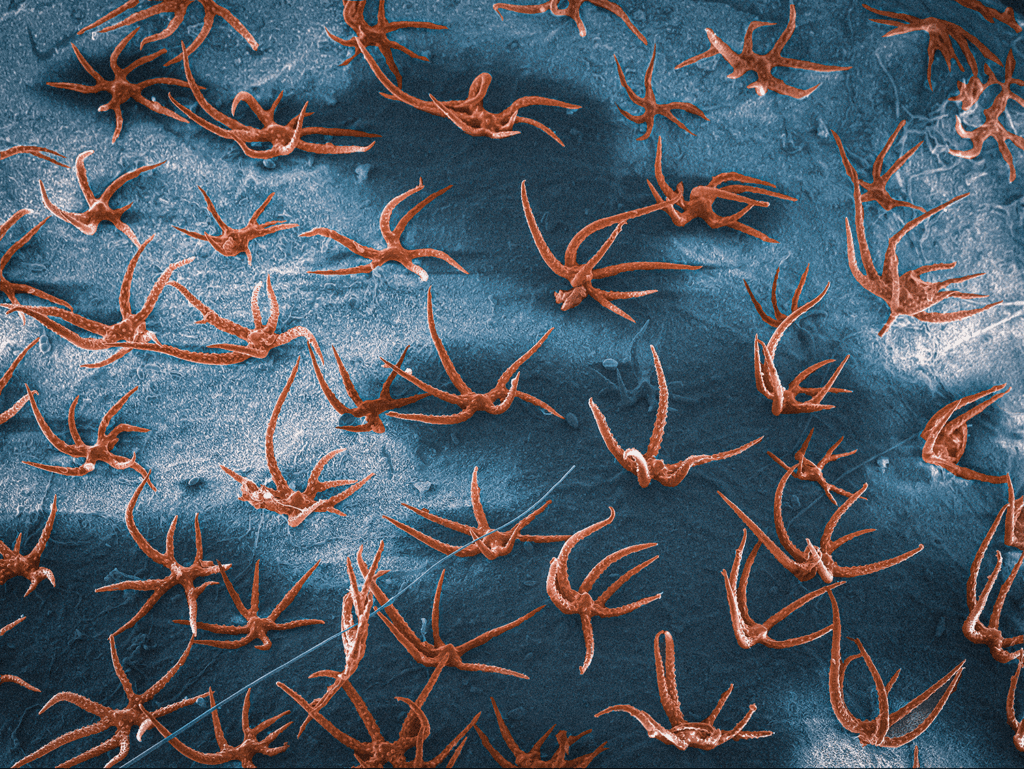
Moře plné hvězdic Alyssum alyssoidesTrichomy na povrchu semene.